
Dallas–Fort Worth
Water Heater Repair & Replacement in Dallas–Fort Worth
A water heater gives fair warning before it fails: a rumble, a shorter shower, a trace of rust at a fitting. We find out what the warning means and tell you plainly whether a repair is worth making.
What the work involves
Few household machines are as plain as a tank water heater, and only a handful of its parts ever wear. On a gas unit that means the thermocouple or igniter, the gas control and the burner; on an electric one, the heating elements and thermostats. Any of them can be replaced, and on a tank in good condition it is usually right to do so. What cannot be repaired is the tank itself. Once the steel gives way and water appears at the base, the heater is finished.
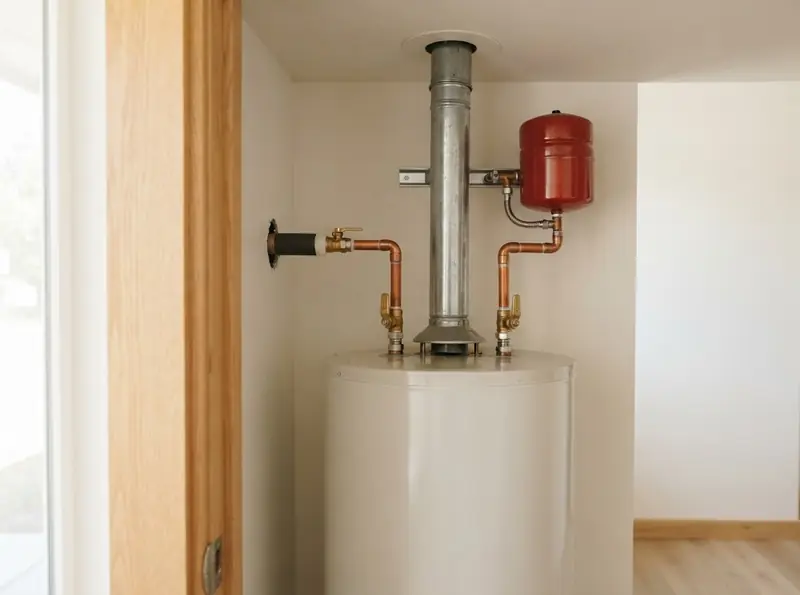
A tank can be expected to serve for eight to twelve years, and rather less where the water is hard and it has never been flushed. When replacement is the answer, the installation matters as much as the heater: correct venting, a working relief valve piped to a safe place, a pan and drain under any tank where a leak would do damage, and, if the plumbing system calls for it, an expansion tank. We also service and install tankless units, which need regular descaling to stay efficient in this water.
What a water heater tells you before it fails
- Showers that turn cool sooner than they did a year ago
- A rumble or a popping noise while the burner or the elements are on
- Rust-tinted hot water, or rust trails on the fittings at the top of the tank
- Water standing in the drain pan, or a darkened patch of floor at the foot of the heater
- On gas, a pilot flame that will not hold; on electric, a breaker found tripped again
Step by step
How the visit goes
Check the whole installation
The gas or electrical supply, the controls, the vent, the relief valve and the tank are each inspected, and the age is read from the rating plate.
Repair or replace, explained
You are told what has failed and whether a repair is sound. Where repair and replacement are both reasonable, each is priced before any work starts.
Install it properly
A new heater is set level, vented and connected to current code, with its pan, drain line and expansion tank in place where they are required.
Fill, start and verify
The system is purged of air, every joint is checked for leaks, and the heater is started and confirmed to be heating properly before we leave.
Local notes
Worth knowing in North Texas
Builders in North Texas often place the water heater in the attic or in a closet in the middle of the house, where a leaking tank can do a great deal of damage before anyone notices. If yours is overhead, look into the drain pan now and then: any water in it is an early warning. The region's hard water also leaves mineral sediment in the bottom of the tank, which causes the rumbling sound and shortens the heater's life, so a yearly flush is worthwhile. In most cities here, a replacement water heater needs a permit.
Water Heaters
Common questions
Is it better to repair or replace an older water heater?
It depends on the tank more than the part. A sound tank under about eight years old is usually worth a new control or element. A tank that has begun to leak cannot be saved, and a heater beyond ten or twelve years with a major part gone is seldom worth the repair. We explain the reasoning either way.
Should I change to a tankless water heater?
It suits some homes well and others poorly. A tankless unit saves space and does not run out, but it costs more to install, and a gas model often needs a larger gas line and its own venting. We look at the gas supply, the venting route and how your household uses hot water before recommending one.
Why is there a small tank above my water heater?
That is a thermal expansion tank. Water expands as it heats, and in a home with a pressure regulator or a check valve at the meter, the extra volume has nowhere to go. The expansion tank absorbs it. If it fails, you may see the relief valve drip, or the pressure in the house surge after the heater has run.
Service area
Where we do this work
Available to homes across Dallas–Fort Worth. For local detail, each city below has a page on its houses and their plumbing.